Can your trees fall victim to The Emerald Ash Borer?
WILLISTON – The small ash tree to the right of Best Buy’s front doors in Williston is now only a skeleton. Pealed back bark reveals a maze of squiggly lines, a signature calling card from ash trees’ worst enemy: the emerald ash borer. The pest, which kills 99.9% of ash trees it infests in North…
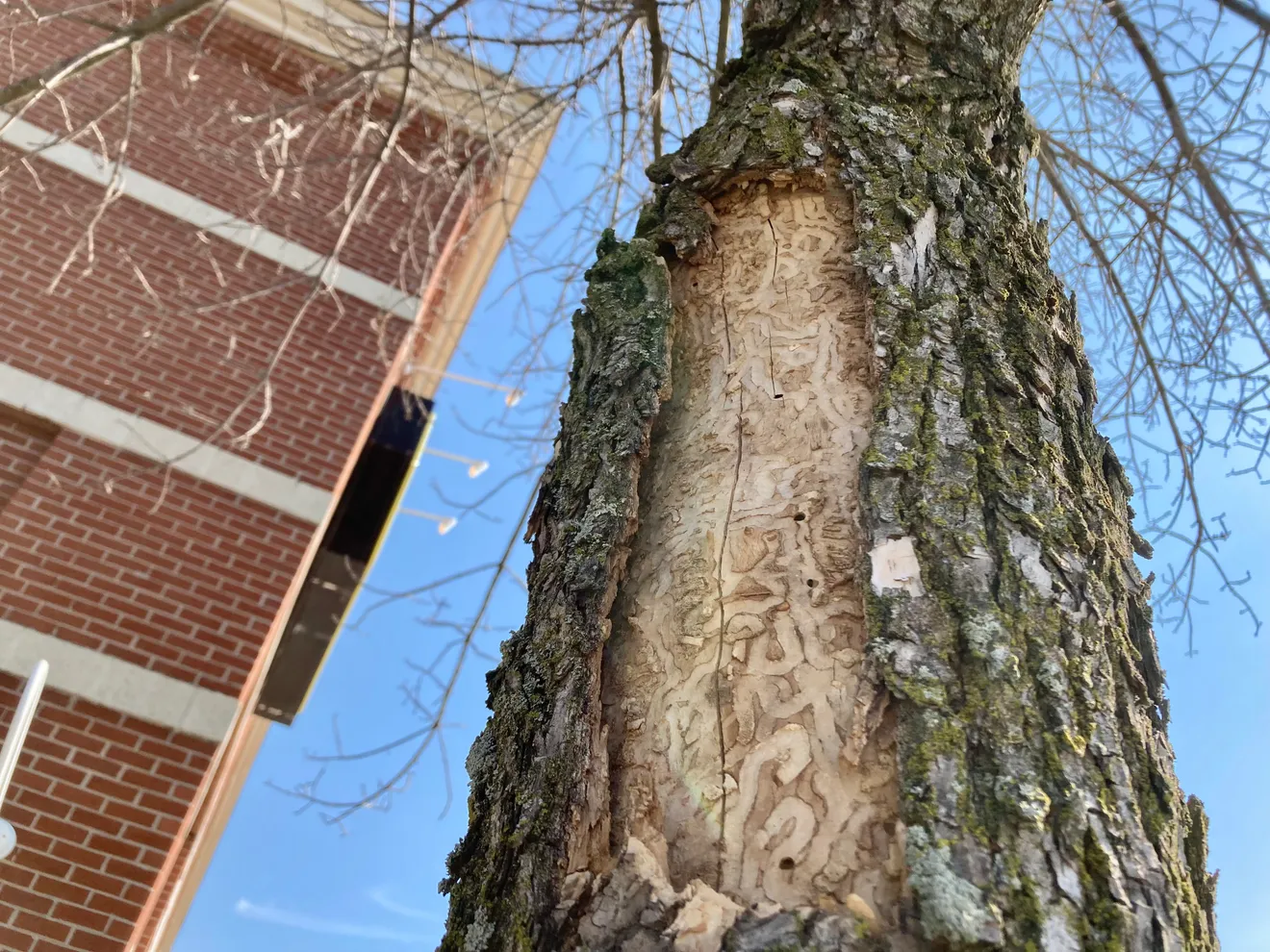
WILLISTON – The small ash tree to the right of Best Buy’s front doors in Williston is now only a skeleton. Pealed back bark reveals a maze of squiggly lines, a signature calling card from ash trees’ worst enemy: the emerald ash borer.
The pest, which kills 99.9% of ash trees it infests in North America, arrived in Vermont in 2018 and was discovered in Chittenden County for the first time in 2021. Greg Ranallo, owner of Teacher’s Tree Service, said discovering it in the Williston parking lot this summer is worrying. It’s the closest he’s seen the bug to Burlington and another sign that owners of ash trees will soon need to get serious about their trees.
Emerald ash borers, native to East Asia, came to the U.S. in 2002, likely in wood packing materials, according to the U.S. Department of Agriculture. Cities planted ash trees in urban settings across the U.S. in the mid-1900s after Dutch elm disease killed off most elm trees in North America. They were chosen because of their resilience under harsh conditions, their shade and their fast growth.
Now ashes face the same fate as the elms they replaced. Municipalities and parks are already clearing ash trees that pose a hazard to the public and private tree owners in Chittenden County must now decide between paying to save their trees or paying to take them down.
To continue reading more the emerald ash borer in Chittenden county, follow here.
Burlington Free Press
Lilly St. Angelo August 1, 2022
Photo by Lili St. Angelo
Our Articles
Is Fall a Good Time to Plant a Tree in Vermont?
Wondering if fall is too late to plant a tree in Vermont? See the local frost timeline, best species picks, and the mistakes that kill new trees.
How Can You Tell If a Tree Is Dangerous?
Worried a tree could fall on your property? Learn the warning signs Vermont arborists check first—and when to book a hazard assessment in Chittenden County.
Why Is My Big Old Tree Dying from the Top Down?
Is your mature tree dying from the top down? The cause is almost always below ground—and often reversible when caught early. See what causes it and when to act.
