
What’s Taking Over My Trees? Aphids & Spider Mites in Vermont
Sticky residue? Browning arborvitae? Learn how to identify aphids and spider mites on Vermont trees — including the cool-season mites most homeowners miss.
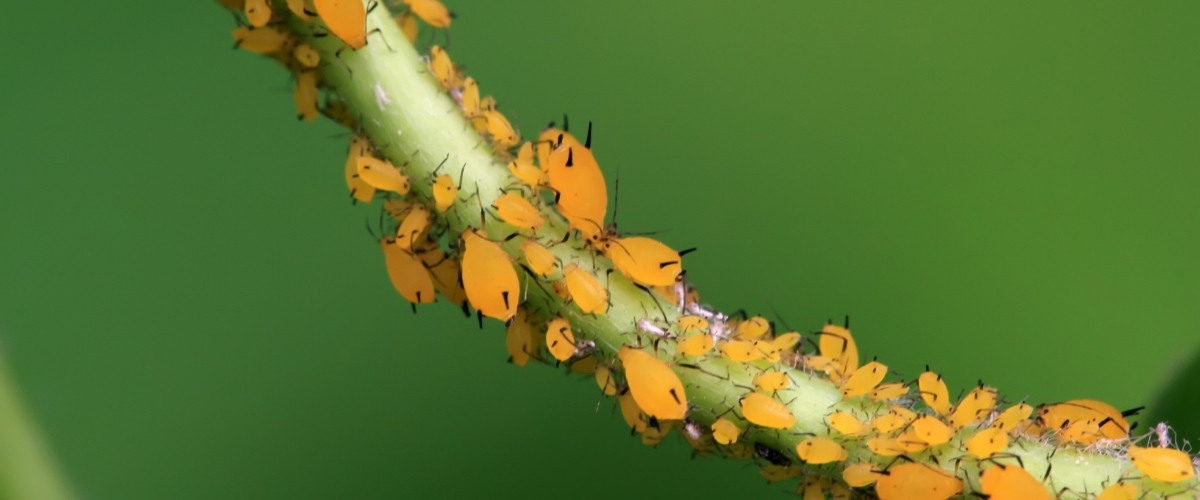
If you’ve lived in Vermont long enough, you’ve probably dealt with at least one mystery tree problem — a sticky film coating your deck furniture all summer, or an arborvitae hedge browning in summer for no obvious reason. It’s easy to chalk it up to heat or drought, but more often than not, the real culprits are two of Vermont’s most common tree pests: aphids and spider mites. They start feeding every spring, and by the time you notice, the damage is already done.
The good news is that they rarely threaten an otherwise healthy, mature tree. The bad news: when you don’t know what you’re looking at, it’s easy to misdiagnose the problem or waste money on the wrong treatment at the wrong time. Learn more about how to tell these pests apart, what their damage looks like, and — maybe most importantly — when you actually need to do something about it.
Key Takeaways
- Aphids and spider mites are Vermont’s most common sap-feeding tree pests, but they rarely threaten healthy, mature trees on their own.
- Aphids leave sticky honeydew on surfaces below the tree; spider mites cause stippling, yellowing, and fine webbing on leaves or needles.
- Vermont has both warm-season and cool-season spider mites — spruce spider mites feed on evergreens in spring and fall, not summer, so spraying in summer won’t help.
- The best first step in treating for aphids and spider mites is usually patience: confirm the pest is present, monitor the damage, and let natural predators work before jumping to chemical treatments.
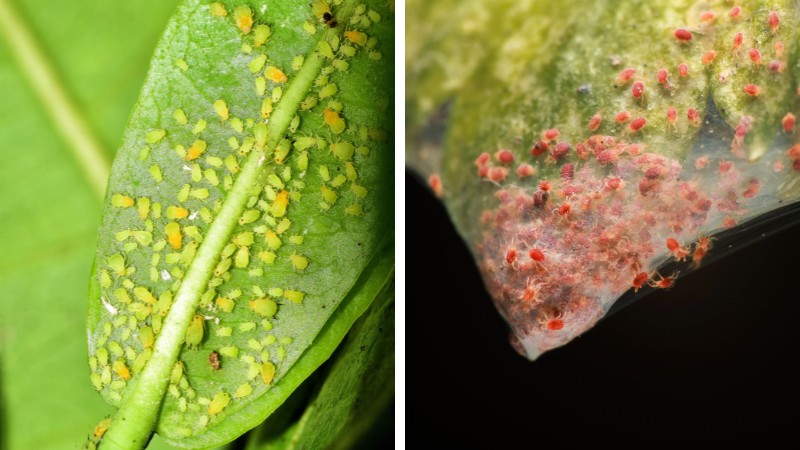
Aphids (left) are visible to the naked eye and cluster in large groups on leaves. Spider mites (right) are much smaller and often surrounded by fine webbing.
What’s the Difference Between Aphids and Spider Mites?
Aphids are visible, soft-bodied insects that leave sticky honeydew on surfaces below the tree; spider mites are nearly invisible arachnids that cause stippling, yellowing, and fine webbing on leaves and needles. Both feed on plant sap, but that’s about where the similarities end.
How to Identify Aphids
Aphids feed by piercing leaves and stems with needle-like mouthparts and sucking out the sap. That sap is rich in sugars, and aphids excrete the excess as honeydew — a sticky, shiny residue that coats everything beneath the tree. Honeydew also attracts ants and breeds black sooty mold, so a single aphid colony can create problems well beyond the branch it’s feeding on.
Here’s how to identify them:
- Size: Pear-shaped, about 1/16″ to 1/4″ long and visible to the naked eye.
- Appearance: Green, yellow, black, brown, or red; some woolly species look like tiny cotton tufts on bark.
- Where to Look: Clustered on the undersides of leaves and along tender new growth.
- First Clue: Sticky honeydew residue on cars, deck railings, and patio furniture beneath the tree.
How to Identify Spider Mites
Spider mites also feed by puncturing individual plant cells and draining their contents — each tiny pale dot on a damaged leaf is a dead cell. One mite doesn’t do much, but colonies build fast, and heavy feeding can drain enough chlorophyll to weaken branches or kill foliage. They’re far harder to spot than aphids:
- Size: Roughly 1/50″ long, making them nearly impossible to see without magnification.
- Appearance: Eight legs as adults (vs. six for insects like aphids); too small to identify by color without aid.
- Where to Look: Fine webbing stretched across leaves or between needles.
- First Clue: Stippling (tiny pale dots on leaves) or bronzing and yellowing of conifer needles.
When Are Spider Mites Active in Vermont?
When spider mites are active depends on the species; Vermont has both warm-season and cool-season spider mites, active at opposite times of the year:
- Warm-Season Mites: The twospotted spider mite and European red mite are the most common in Vermont. They peak during July and August, when temperatures are high and rainfall is low, feeding primarily on deciduous trees and shrubs.
- Cool-Season Mites: The spruce spider mite — considered one of the most destructive spider mites in the country — is active in spring (around May) and again in fall (September through October). It goes dormant in summer heat. Its preferred hosts are spruce, arborvitae, hemlock, and juniper — all extremely common in Vermont yards and among the most vulnerable conifers to spider mite damage.
DID YOU KNOW?: Unlike spider mites, aphid activity in Vermont is pretty predictable. They show up in late spring, peak in early summer, and taper off by August. If you’re seeing sticky honeydew on your deck furniture, it’s almost always a May-through-July problem. Spider mites, on the other hand, can be active in spring, summer, or fall depending on the species.
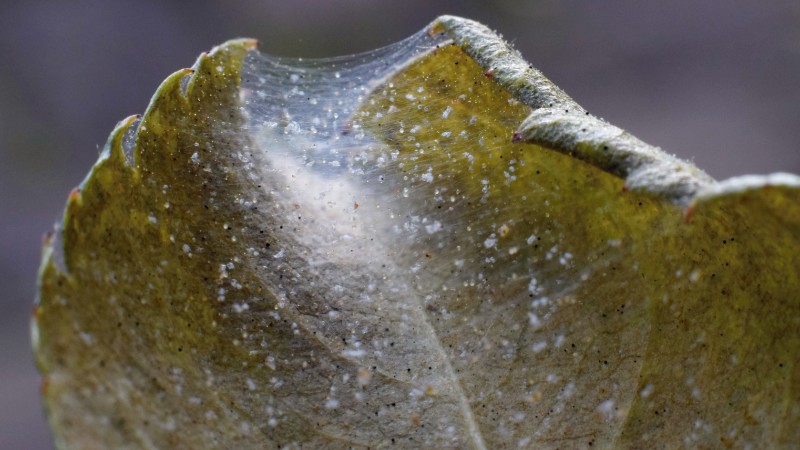
Stippling damage and fine webbing on a leaf are telltale signs of a spider mite infestation.
What Does Aphid and Spider Mite Damage Look Like?
Aphid damage typically shows up as curled leaves, sticky surfaces, and black mold; spider mite damage appears as speckled, yellowing, or bronzing foliage. Those first clues can point you in the right direction, but each pest leaves a broader pattern of damage that’s worth knowing. Here’s what to look for:
Aphid damage signs:
- Curled or twisted leaves
- Sticky honeydew on surfaces below the canopy
- Black sooty mold growing on honeydew deposits
- Stunted new growth
- Ants trailing up the trunk (they feed on the honeydew)
Warm-season spider mite damage (twospotted spider mite):
- Stippling that gives leaves a washed-out, speckled look
- Yellowing and premature leaf drop
- Fine webbing between leaves
- Worse during hot, dry spells in July and August, especially on water-stressed trees
Cool-season spider mite damage (spruce spider mite):
- Older, interior growth starts yellowing and bronzing
- Needle drop and branch dieback
- Affects spruce, arborvitae, hemlock, and juniper
Unfortunately, spruce spider mite damage often doesn’t appear until mid-summer, even though the feeding happened in spring. You might see browning during the hottest parts of summer and assume it’s heat stress — but the real culprit was mites feeding back earlier in the year.
How Do You Get Rid of Aphids and Spider Mites on Trees?
Start by confirming the pest is present and monitoring the damage — then escalate to water sprays, natural predators, and targeted treatments only as needed. This approach avoids wasting money on the wrong treatment at the wrong time.
How to Monitor Trees for Aphids and Spider Mites
Check the undersides of leaves for aphid clusters and sticky honeydew on surfaces below the tree. For spider mites, use the white paper test: hold a sheet of white paper under a suspect branch, tap firmly,
and look for tiny moving specks. The goal is to confirm which pest you’re dealing with and whether the damage is significant enough to act on — a few aphids on a healthy tree is normal, not an emergency.
Low-Impact Methods for Controlling Aphids and Spider Mites
A strong blast of water from your garden hose knocks both aphids and mites off leaves effectively and won’t harm beneficial insects. Beyond that, keep these principles in mind:
- Protect Natural Predators: Ladybugs, lacewings, parasitic wasps, and predatory mites do tremendous work keeping pest populations in check — if you let them.
- Avoid Broad-Spectrum Insecticides: Sprays applied for other pests can actually cause mite outbreaks by killing the natural predators that were holding mites in check.
- Keep Trees Healthy: Proper watering and soil care reduce vulnerability. Stressed trees attract these pests. Deep root fertilization can help maintain the kind of root health and soil biology that keeps trees resilient.
When Do Aphids and Spider Mites Need Chemical Treatment?
Chemical treatment makes sense when low-impact methods aren’t keeping up, such as if the infestation is spreading, damage is worsening, or the tree is already stressed and can’t afford more pressure. Horticultural oils and insecticidal soaps are effective low-toxicity options, though they must contact the pest directly. Systemic treatments are the next step for severe or recurring infestations — professional application matters because product selection, dosage, and timing all need to be right.
For spruce spider mites, treatment must be timed for spring or fall, when mites are actively feeding. Removing heavily infested branches through targeted pruning can also reduce pest pressure, and understanding the basics of integrated pest management (IPM) can help you make smarter decisions about when and how to treat.
When to Call a Professional Arborist
Most aphid and spider mite problems can be managed on your own, but some situations call for a professional diagnosis. Here’s when it’s worth bringing in a Certified Arborist:
- Your tree is already stressed, declining, or young, and an infestation is adding compounding pressure.
- Damage is spreading rapidly — significant leaf drop, widespread stippling, or branch dieback.
- You’re unsure what’s causing the problem. Mites, aphids, disease, and environmental stress can look similar, and misdiagnosis wastes time and money.
- Evergreen damage on arborvitae, spruce, or hemlock that may be mite-related — conifers don’t regrow lost needles, so the stakes are higher.
- You’ve tried hosing and cultural adjustments, but the problem persists.
A certified tree professional can confirm which pest is involved, assess tree health, and recommend the right treatment at the right time.
Frequently Asked Questions About Aphids and Spider Mites
Can aphids spread from one tree to another?
Yes. When a colony gets overcrowded, some aphids develop wings and fly to nearby trees to start new colonies. This is why aphids can appear suddenly on a tree that was free of pests the week before.
Do spider mites live in the soil?
No. Spider mites live and feed on leaves and needles, not in the soil. However, spruce spider mites survive the winter as eggs on bark and branches, so they’re present on the tree year-round — even when you can’t see active feeding.
How often should I check my trees for aphids and spider mites?
A quick visual check once a month during the growing season is a good habit. For evergreens like arborvitae and spruce, pay extra attention in May and September through October, when cool-season spruce spider mites are most active.
Can mulching or watering help prevent aphid and spider mite problems?
Yes. Healthy, well-watered trees are less attractive to both pests and better equipped to tolerate feeding. A 2- to 4-inch layer of mulch helps retain soil moisture and supports the kind of root health that keeps trees resilient.
Do aphids and spider mites affect the same trees?
Sometimes, but they tend to favor different hosts. Aphids target a wide range of deciduous trees and shrubs, especially species with soft new growth, like maples and birches. Warm-season spider mites also feed on deciduous trees, while the spruce spider mite feeds almost exclusively on conifers like spruce, arborvitae, and hemlock.
Should I treat my trees preventatively for spider mites every year?
Not necessarily. Preventative treatments can kill the natural predators that keep mite populations in check, which can actually make the problem worse. Monitor each spring and fall and only treat when you’ve confirmed active mites and meaningful damage.
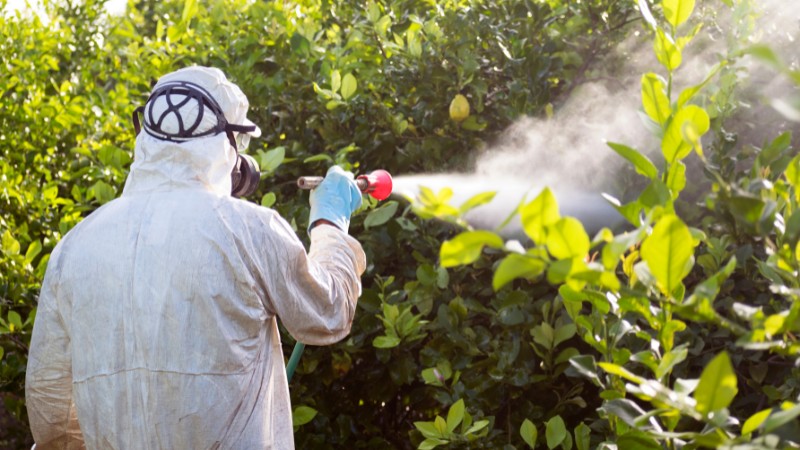
Foliar spray treatments must contact the pest directly to be effective — proper coverage and timing are critical.
Protect Your Trees This Spring with Help from Teachers Tree Service
Aphids and spider mites though quite common in Vermont, are usually manageable when caught early. The biggest takeaway for homeowners with evergreens: don’t overlook cool-season spruce spider mites. The damage you see in summer may have started months earlier.
If you’re seeing damage on your trees or shrubs — or want to get ahead of it before feeding season begins — our Certified Arborists can diagnose the issue and recommend the right approach.
Give us a call at 802-922-3428 or request a proposal to get started.
Greg Ranallo
From the classroom to the trees
Greg Ranallo has been working with trees since he was 19 years old — a passion that began long before it became a profession. After earning a master's degree in education and teaching high school social studies in his native Minnesota, Greg ultimately followed the calling he'd had since boyhood and built Teacher's Tree Service into one of the Champlain Valley's most trusted arboriculture companies. As he puts it, "I was always more a tree guy who was teaching than a teacher who did tree work."
Our Articles
Why Is My Big Old Tree Dying from the Top Down?
Is your mature tree dying from the top down? The cause is almost always below ground—and often reversible when caught early. See what causes it and when to act.
Is Beech Leaf Disease Killing Your Beech Tree?
Beech leaf disease in Vermont has spread to 43 towns in two years. Spot the early warning signs, understand your management options, and protect your trees.
It Takes a Village to Rebuild an Osprey Nesting Site
Teachers Tree Service was proud to support a community effort to rebuild an osprey nesting site in Vermont. Read the full article originally published by The Charlotte News.
