Emerald ash borer’s destruction prompts tree diversity
Greg Ranallo, an arborist and the owner of Teachers Tree Service, walked along the sidewalk in front of the Shaw’s on Route 7 in South Burlington last week, stopping to point at a tree where the bark was stripped off, revealing a swirling pattern on the wood beneath. “This is from the larvae feeding on…
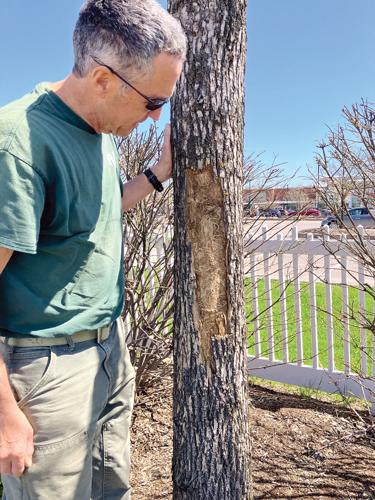
Greg Ranallo, an arborist and the owner of Teachers Tree Service, walked along the sidewalk in front of the Shaw’s on Route 7 in South Burlington last week, stopping to point at a tree where the bark was stripped off, revealing a swirling pattern on the wood beneath.
“This is from the larvae feeding on the wood,” he said.
The pattern in the wood was one of the signs that tipped him and others off that emerald ash borer had infested the tree. Because of the insect, Ranallo said, that tree, and the rest of the ash trees lining that part of the street were now dead, despite appearing healthy a year ago. According to Ranallo, whoever owns the shopping center will soon need to get them removed.
Arborists, residents and local lawmakers have been aware of the coming tide of emerald ash borers for years. The bugs, native to northeastern Asia, were first detected in the United States in 2002, in Michigan. Over the past 20 years, they’ve spread across the country, feeding on ash trees, laying their eggs and leaving almost 100 percent of black, green and white ashes they infest dead in their wake.
Part of the problem with the emerald ash borer is that, after they’ve bored through the wood, the ash trees decay quickly and their wood becomes structurally compromised, increasing the likelihood that they will fall and damage whatever happens to be nearby, according to South Burlington’s arborist, Nick Garty. This makes them a problem for the many Vermont towns that have commonly used them as street trees.
Read the rest of the article about Greg and treating Emerald Ash Borer here.
The Other Paper
Get more information on the emerald ash borer here
Our Articles
Is Fall a Good Time to Plant a Tree in Vermont?
Wondering if fall is too late to plant a tree in Vermont? See the local frost timeline, best species picks, and the mistakes that kill new trees.
How Can You Tell If a Tree Is Dangerous?
Worried a tree could fall on your property? Learn the warning signs Vermont arborists check first—and when to book a hazard assessment in Chittenden County.
Why Is My Big Old Tree Dying from the Top Down?
Is your mature tree dying from the top down? The cause is almost always below ground—and often reversible when caught early. See what causes it and when to act.
