Emerald Ash Borer in Vermont: What to Do with Your Ash Trees
Spotted thinning canopy or D-shaped holes in your ash? Emerald ash borer in Vermont moves fast — here's how to know if your tree can still be saved this season.
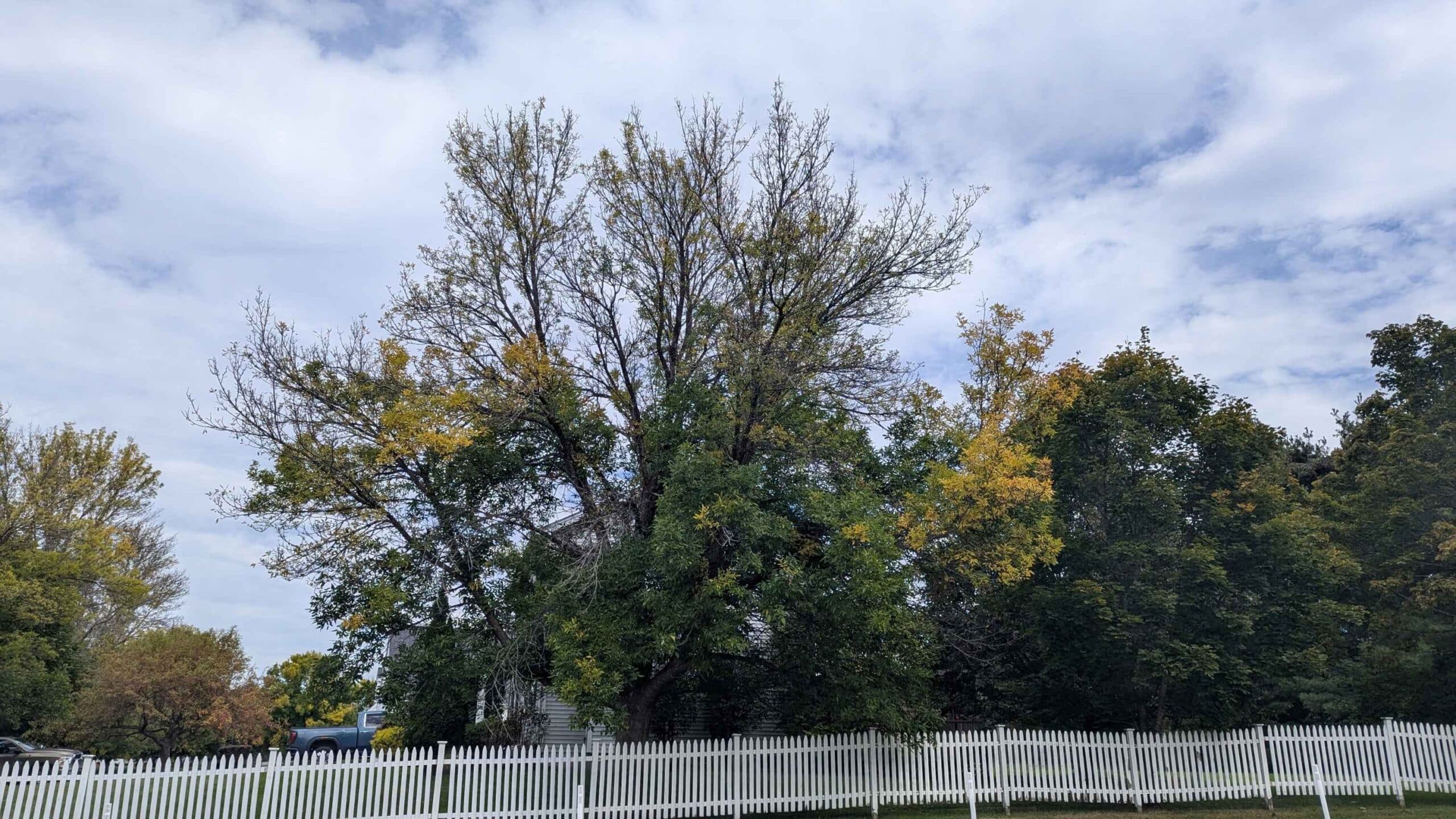
Emerald ash borer is no longer approaching Vermont. It is here, and it is widespread.
According to the latest update from the Vermont Department of Forests, Parks and Recreation, EAB has now been detected throughout Vermont, reaching all 14 counties and 192 municipalities and putting about 95% of Vermont towns within 10 miles of a known detection.
For homeowners with ash trees, those numbers make one thing clear: this is no longer a problem to put off for another year. Healthy ash trees may still be candidates for treatment, but once an untreated tree begins to decline, it can become increasingly brittle, hazardous, and difficult to remove.
The question is no longer whether EAB will reach your area. It’s what you’re going to do about the ash trees on your property.
Key Takeaways
- Emerald ash borer is nearly always fatal to untreated ash trees, making early detection and a plan for each tree important.
- Canopy thinning, woodpecker flecking, bark splits, D-shaped exit holes, and epicormic sprouts are common signs of an EAB infestation.
- Healthy ash trees can often be protected with professional insecticide treatment, but treatment becomes less viable as decline progresses.
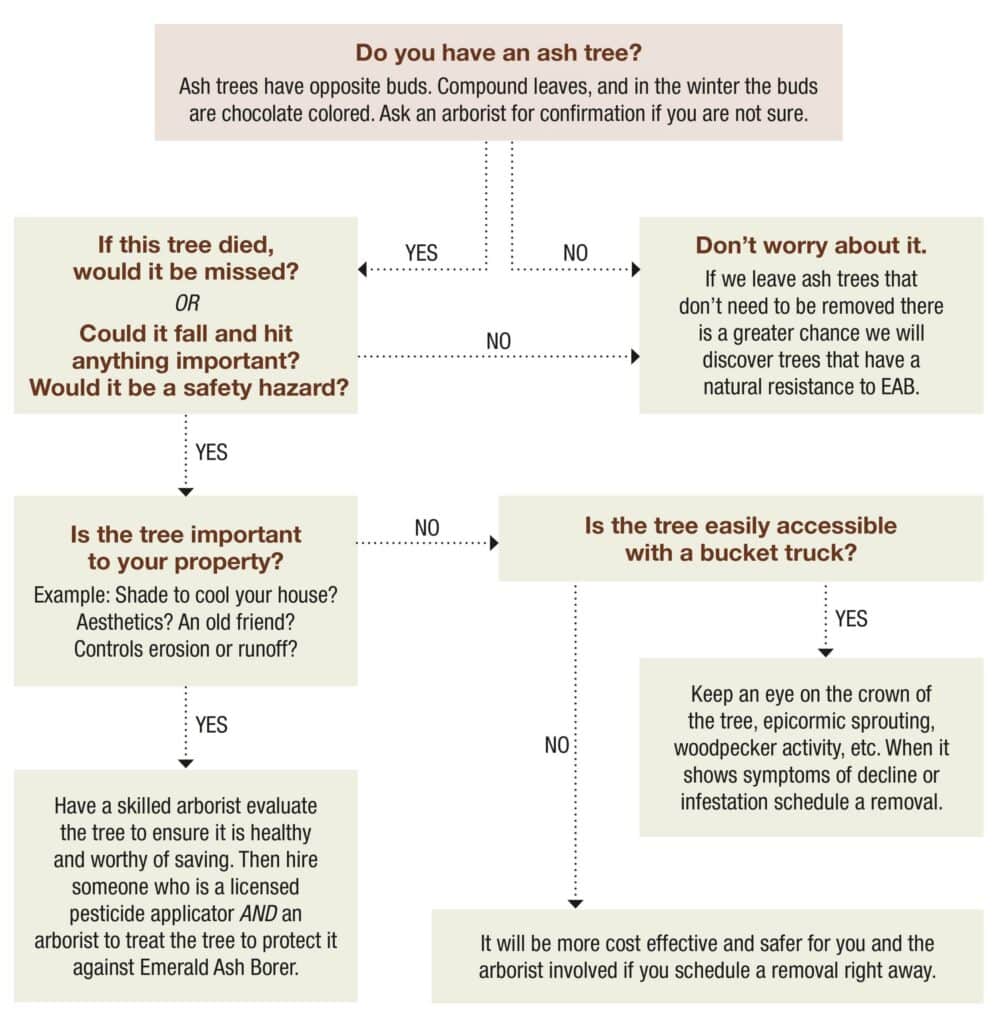
- Whether an ash tree should be treated or removed depends on its health, structural condition, location, and value to the property.
- Declining EAB-infested ash trees become increasingly brittle and unstable, so delaying removal can make the job more hazardous, difficult, and expensive.
Why Is the Emerald Ash Borer a Threat to Vermont Ash Trees?
Emerald ash borer (Agrilus planipennis) is a small, metallic-green beetle native to eastern Asia that kills North American ash trees by tunneling through the inner bark and cutting off the tree’s flow of water and nutrients. First detected in Michigan in 2002, EAB reached Vermont in 2018 and has now killed hundreds of millions of ash trees across more than 30 states.
Three things make EAB different from the average tree pest:
- It Targets All Native Ash Species: White, green, and black ash — the three ash species native to Vermont — are all vulnerable, and there are no known resistant varieties.
- It’s Nearly Always Fatal Without Treatment: Once infested, more than 99% of untreated ash trees die within 3-5 years.
- It Hides for Years Before Showing Symptoms: Trees can be infested for 2-4 years before any visible signs appear, which is why a tree that looks fine doesn’t mean it’s healthy.
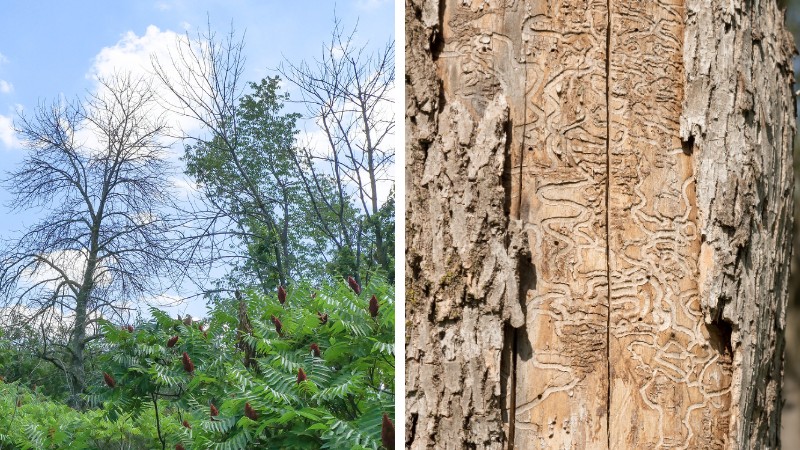
Two telltale signs of emerald ash borer: A dying upper canopy with dense epicormic sprouts (left) and the serpentine S-shaped galleries (right) created by EAB larvae feeding underneath the bark.
How Do You Know if Your Ash Tree Has Emerald Ash Borer?
Knowing whether your ash tree has EAB comes down to looking in the right places at the right time of year — most of the early evidence appears high in the canopy and on the upper trunk, where it’s easy to miss from the ground. A trained eye can usually confirm an infestation from a combination of two or three indicators but spotting the first one is what gets the process started.
Watch for changes that start at the top of the tree and work downward:
- Top-Down Canopy Thinning or Dieback: Upper-canopy branches lose leaves and die off first, while the lower tree may still look relatively healthy.
- Woodpecker Flecking High in the Tree: Light-colored patches where woodpeckers have stripped bark to feed on larvae underneath — often the earliest visible sign.
- Vertical Bark Splits: Cracks running up and down the trunk where the tree is trying to callus over the larval galleries underneath.
- D-Shaped Exit Holes: About 1/8 inch wide with one flat side — facing any direction. Round holes indicate a different (usually native) borer; D-shaped holes mean EAB.
- S-Shaped Galleries Under the Bark: Winding tunnels packed with frass (fine sawdust mixed with insect waste). Usually only visible if a piece of bark falls off or is pulled back.
- Epicormic Sprouting: New shoots growing directly from the trunk or main branches — a stress response as the tree compensates for losing its upper foliage.
Spotting two or three of these indicators on the same tree is a strong signal of EAB, but several Vermont pests and diseases mimic individual symptoms, so a professional EAB assessment is the surest way to confirm what’s happening — and to figure out whether your tree can still be saved.
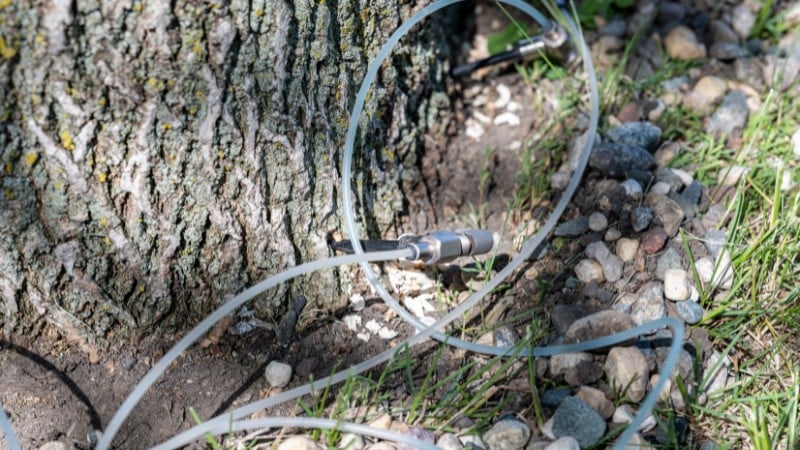
Systemic insecticide is delivered directly into the tree’s vascular system through small ports at the base of the trunk — a treatment that requires a licensed pesticide applicator
What Does Professional EAB Treatment Involve?
Professional EAB treatment uses systemic insecticides — either azadirachtin or mectinite — applied by a licensed pesticide applicator while the tree still has enough living tissue to absorb and distribute the treatment. The two treatments differ mainly in frequency and delivery method, and your arborist will recommend the right one based on the tree’s size, condition, and location:
- Azadirachtin: Needs to be reapplied every year, which makes it a steadier ongoing commitment at a lower cost per treatment.
- Mectinite: Delivered through small injection ports in the trunk and protects the tree for at least two full seasons per application, which often makes it the better fit for larger ash trees that justify the longer interval.
Both treatments are most effective when applied between spring bud break and late June, while the tree is actively moving water and nutrients through its trunk. Fall applications aren’t recommended in Vermont, which is why an early-spring assessment is the most important step in protecting your ash tree.
Should You Treat or Remove an Ash Tree with Emerald Ash Borer?
Not every ash tree affected by emerald ash borer needs to be removed immediately. The right decision usually depends on the tree’s health, location, condition, and overall value to the property.
The Vermont Department of Forests, Parks and Recreation is urging homeowners to make those decisions before their options become more limited:
“Infested trees decline rapidly and their risk of failure rises over time, increasing potential hazards.”
The state’s current EAB guidance also emphasizes that insecticide treatment is only feasible for healthy ash trees, while removal can become more difficult and expensive as an infested tree declines.
Ash Trees That Are Often Worth Treating
Treatment may still make sense when a tree:
- Still has a relatively full, healthy canopy
- Shows only limited signs of decline or dieback
- Provides important shade, privacy, or erosion control
- Has sentimental or landscape value
- Is structurally sound and safe to maintain
- Can be monitored and treated consistently over time
In many cases, preserving a mature ash tree is less expensive than removing and replacing one of similar size.
When Removal Is Often the Better Option
Removal is usually the safer choice when a tree has:
- Significant canopy thinning or large dead sections
- Extensive bark splitting or visible woodpecker activity
- Structural instability or major branch failure
- More advanced emerald ash borer damage
- A location near homes, driveways, sidewalks, power lines, or other high-risk targets
Have a Declining Ash Tree? Consider Removing It This Winter
If you already have a declining, untreated ash tree, winter is a good time to have it removed. The longer an EAB-infested ash is left to decline, the more brittle and unstable it can become, increasing the risk of failure and making the tree more difficult and expensive to remove.
When Should You Call an Arborist About Your Ash Tree?
If you have ash trees on your property, it’s worth scheduling an assessment before another emerald ash borer treatment season arrives — especially if you’ve noticed thinning canopies, dead branches, bark splitting, or nearby infestations. Early evaluations help homeowners understand whether a tree is still a good candidate for treatment before decline becomes more advanced.
An arborist assessment is especially helpful if:
- You Have Multiple Ash Trees and Need to Prioritize: An assessment helps you sort which trees are worth treating, which should be removed, and which can be monitored.
- You Want a Clear Answer Before May: Treatment scheduling fills up quickly once the window opens; an April assessment puts you ahead of the rush.
- You Inherited an Ash With Unknown History: A baseline evaluation tells you what you’re working with before any decisions get made.
- A Neighbor’s Ash Has Been Confirmed Infested: Adult beetles can fly up to half a mile, so nearby infestation is a meaningful risk signal for your own trees.
Frequently Asked Questions About Emerald Ash Borer in Vermont
How do I know if my tree is an ash tree?
Ash trees have opposite, compound leaves with five to nine leaflets and diamond-patterned bark on mature trunks. Vermont’s three native ash species — white, green, and black ash — are all vulnerable to EAB. If you’re not sure, your town’s tree warden or a Certified Arborist can identify the species during a property visit.
How does emerald ash borer spread?
EAB spreads two ways: adult beetles fly between trees from June through September, and infested firewood carries larvae into new areas when transported. Don’t move firewood off your property if you have or suspect EAB. This is also why cutting down one ash doesn’t protect the others — the beetle moves through the air, not the soil.
What time of year is EAB most active in Vermont?
Adult beetles emerge and fly between June 1 and September 30, and eggs hatch in late summer with larvae feeding under the bark through fall. Treatments need to be applied before the beetles take flight, which is why the May treatment window matters.
What can I do with the wood from an ash tree that has to be removed?
In many cases, ash wood can be kept and used as firewood, chipped, or processed on the property. If you want to move the wood somewhere else, however, you’ll need to follow Vermont’s ash wood movement guidelines to help prevent EAB from spreading to new areas.
The rules depend on the time of year. From October 1 through May 31, when adult EAB beetles aren’t flying, Vermont allows some additional movement of ash logs and firewood under specific conditions. Movement is more restricted during the June 1 through September 30 flight season.
If we’re removing an ash tree from your property, we can help you understand your options for handling the wood and whether it can be moved off-site.
Can I treat my ash tree myself?
No. Both EAB-effective treatment options require a licensed pesticide applicator. Over-the-counter products use lower-concentration formulations and improper application can injure the tree or fail to provide real protection. An on-site assessment by a Certified Arborist is the necessary first step.
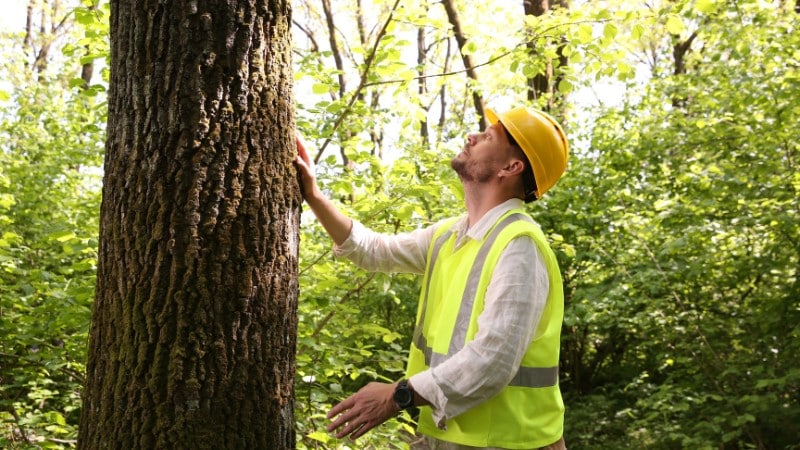
A Teachers Tree Service arborist evaluating a mature ash for emerald ash borer signs — the combination of canopy condition, bark damage, and exit holes help determine if a tree can be saved or not.
EAB Is Here – Now Is the Time to Assess Your Ash Trees
With EAB now established throughout Vermont, waiting to see whether it reaches your area is no longer much of a strategy. If you have ash trees on your property, the more important question is what condition they’re in now.
Healthy ash trees may still be candidates for protection, while declining untreated trees may be better addressed with removal before additional deterioration makes them more hazardous and difficult to remove. Teachers Tree Service can evaluate your ash trees individually and help you prioritize which trees to protect or remove.
Call 802-922-3428 or request a proposal to schedule an ash tree assessment and make a plan before another season of decline.
Greg Ranallo
From the classroom to the trees
Greg Ranallo has been working with trees since he was 19 years old — a passion that began long before it became a profession. After earning a master's degree in education and teaching high school social studies in his native Minnesota, Greg ultimately followed the calling he'd had since boyhood and built Teacher's Tree Service into one of the Champlain Valley's most trusted arboriculture companies. As he puts it, "I was always more a tree guy who was teaching than a teacher who did tree work."
Our Articles
Why Won’t My Shrub Lose Its Leaves in Vermont?
When a shrub won't lose its leaves while the rest of your Vermont yard goes bare, it's usually invasive buckthorn or honeysuckle. Here's how to tell which.
Is Fall a Good Time to Plant a Tree in Vermont?
Wondering if fall is too late to plant a tree in Vermont? See the local frost timeline, best species picks, and the mistakes that kill new trees.
How Can You Tell If a Tree Is Dangerous?
Worried a tree could fall on your property? Learn the warning signs Vermont arborists check first—and when to book a hazard assessment in Chittenden County.
