Why Is My Big Old Tree Dying from the Top Down?
Is your mature tree dying from the top down? The cause is almost always below ground—and often reversible when caught early. See what causes it and when to act.
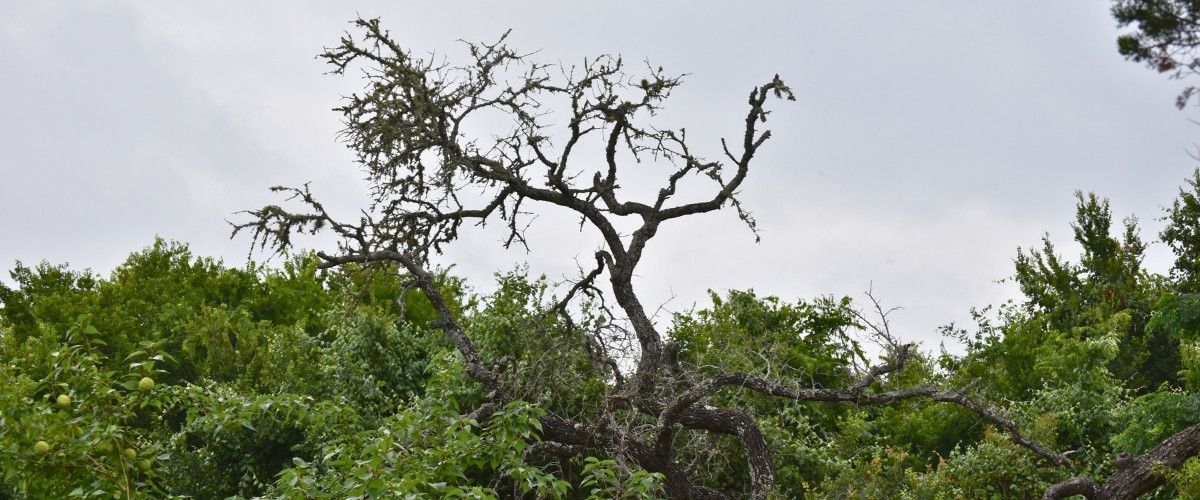
Seeing the top of a large, mature tree lose its leaves while the rest of the canopy still looks healthy is unsettling. It often leaves homeowners wondering whether the tree is dying or if there’s still time to save it.
In many cases, a tree dying from the top down is a sign of stress below ground rather than a problem that started in the canopy. Root damage, compacted soil, buried root flares, and even drought from months or years ago can all limit the tree’s ability to move water and nutrients upward. The sooner the underlying cause is identified, the better the chances of slowing or even reversing the decline.
Key Takeaways
- A tree dying from the top down is usually a sign of root or soil problems, not a problem that started in the canopy.
- Buried root flares, girdling roots, compacted soil, and drought stress are among the most common causes of top-down dieback in mature trees.
- Early diagnosis gives you the best chance of preserving a mature tree before significant canopy loss occurs.
- Arborists diagnose top-down dieback by evaluating the entire tree, including the root system, to identify the underlying cause before recommending treatment.
- Not every tree with top-down dieback needs to be removed—many can recover when the underlying problem is identified and addressed early.
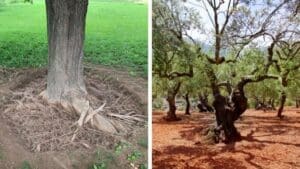
Two below-ground causes of top-down decline—girdling roots wrapped around the trunk (left) and compacted soil that starves roots of air (right).
What Causes Top-Down Dieback?
Most mature trees that die from the top down are responding to problems below ground, not in the branches themselves. Because the upper canopy is farthest from the root system, it’s usually the first part of the tree to show signs that water and nutrients aren’t moving properly.
Several issues can disrupt the root system, but these are the most common.
Root Problems
A buried root flare is one of the most common triggers of top-down decline. The base of a healthy mature tree should widen where the trunk meets ground, not drop straight in like a fence post. When soil, sod, or piled mulch buries that flare (creating what’s called a “buried root collar”) roots start circling the trunk instead of spreading outward.
Over time, these girdling roots compress the trunk and restrict the movement of water and nutrients, causing the highest branches to thin, decline, and eventually die back.
Compacted Soil
Even healthy roots struggle when they’re growing in compacted soil. Years of foot traffic, mowing, parked vehicles, or nearby construction gradually squeeze the air pockets out of the soil, leaving roots with less oxygen and less room to grow.
Without a healthy root system, the tree can’t move enough water to support its entire canopy. The upper branches, being farthest from the roots, are often the first to decline.
Common sources of soil compaction include:
- Repeated foot traffic beneath the canopy
- Lawn mowers and landscaping equipment
- Parked vehicles or heavy machinery
- Construction, grading, or driveway projects near the tree
Drought Stress
Extended drought can trigger or worsen top-down dieback, even after rainfall returns to normal. During prolonged dry periods, fine feeder roots may die back, limiting the tree’s ability to absorb water long after the soil appears moist again.
For mature trees already dealing with buried roots or compacted soil, drought often becomes the tipping point that causes the upper canopy to begin thinning or dying back.
Can a Tree Recover Once the Top Starts Dying?
Yes, many mature trees can recover from top-down dieback if the underlying problem is identified and treated early. The more of the canopy that remains healthy, the better the tree’s chances of stabilizing and producing new growth over time.
The key is treating the cause rather than the symptom. If root problems, compacted soil, or drought stress are limiting the tree’s ability to move water and nutrients, pruning dead branches won’t stop the decline. The underlying issue has to be corrected first.
Depending on what an arborist finds, treatment may include:
- Root Collar Excavation: Exposing a buried root flare and removing girdling roots that are restricting the trunk.
- Soil Improvement: Relieving compaction and improving conditions so roots can grow and function properly.
- Growth Regulation: In some cases, a plant growth regulator can slow canopy growth and redirect energy toward rebuilding the root system.
- Structural Support: If root stress has weakened major limbs or stems, cabling or bracing may be recommended to reduce the risk of failure while the tree recovers.
Not every declining tree can be saved, but many can be stabilized when problems are caught before extensive canopy loss or decay develops.
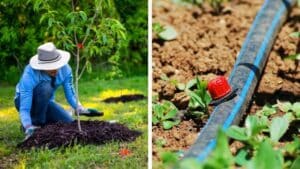
Everyday care that keeps roots healthy: mulching out toward the dripline, never piled against the trunk, and slow, deep watering through dry spells.
What Should You Do If Your Tree Is Dying from the Top Down?
If the top of your tree is thinning or dying back, avoid guessing at the cause. Problems that start in the root system often look similar above ground, but they require very different solutions. Taking the right first steps can improve the tree’s chances of recovery.
Don’t Assume It Just Needs Fertilizer
A declining tree isn’t always lacking nutrients. If the real problem is girdling roots, compacted soil, or drought damage, fertilizer won’t fix it—and can sometimes encourage new growth the stressed root system can’t support.
Avoid Making the Problem Worse
Until you know what’s causing the decline, avoid practices that put additional stress on the tree, such as:
- Piling mulch against the trunk
- Driving or parking equipment beneath the canopy
- Digging or disturbing the root zone
- Pruning large healthy limbs to “balance” the tree
Have the Root System Evaluated
Because top-down dieback often begins below ground, an arborist will usually start by evaluating the root collar and surrounding soil. This helps determine whether buried root flares, girdling roots, soil compaction, or another root problem is contributing to the decline.
How Do Arborists Find the Cause of Top-Down Dieback?
A tree dying from the top down can have several different underlying causes, so an arborist focuses on identifying the source of the stress before recommending treatment.
Because many cases begin below ground, the evaluation often starts at the root collar. Using an Air Spade, an arborist can safely expose the root flare to check for buried roots, girdling roots, soil compaction, and other problems that may be restricting the flow of water and nutrients.
They’ll also inspect the trunk, canopy, and major limbs for signs of disease, decay, insect activity, or structural defects. Once the cause is identified, they can determine whether the tree is a good candidate for treatment or if removal is the safer option.
Frequently Asked Questions About Trees Dying from the Top Down
What is crown dieback?
Crown dieback is the gradual death of branches starting at the top and outer edges of a tree’s canopy. It usually reflects stress in the roots, soil, or water supply below ground rather than a problem in the branches.
Could other trees on my property have the same problem?
Possibly. If the cause of your tree’s decline is related to soil conditions, drought stress, or root problems, nearby mature trees growing in the same environment may be at risk as well—even if they aren’t showing symptoms yet.
Many older properties have trees of similar age growing in the same soil and drainage conditions. If one tree is found to have issues like a buried root flare or compacted soil, it’s often worth having the surrounding trees evaluated, too. Catching problems early can make treatment simpler, less expensive, and more successful than waiting for visible dieback to appear.
Is a tree dying from the top dangerous?
It can be. Dead wood high in the canopy is brittle and more likely to break and fall, so a tree with significant top dieback should be assessed for hazard potential, not just for its health.
How long does it take to see improvement after root collar work or growth regulation?
It varies with the tree and treatment. Root and soil correction generally shows results over one to a few growing seasons, while growth regulation’s effects typically last around 3 years before requiring additional treatment.
How much does treatment for a declining tree typically cost?
It depends on the tree’s size, condition, and which services it needs—a single growth regulation treatment is very different from a full root collar excavation with a structural assessment. A consulting arborist can provide a detailed proposal after an on-site evaluation.
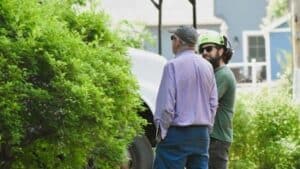
A Teachers Tree Service arborist walks a homeowner through an on-site assessment; it’s the first step before any root collar inspection or treatment.
Protect Your Mature Tree with Teachers Tree Service
A tree dying from the top down doesn’t always need to be removed. In many cases, it’s the first visible sign of a root or soil problem that can be treated if it’s caught early. The sooner the cause is identified, the more options you’ll have to preserve your tree.
At Teachers Tree Service, our ISA Certified Arborists specialize in diagnosing and treating mature tree decline. From root collar inspections and soil health evaluations to customized plant health care plans, we’ll determine what’s causing the problem and recommend the best path forward.
If you’ve noticed thinning branches or dieback in the top of your tree, call us at 802-810-8092 or request a proposal to schedule an on-site evaluation.
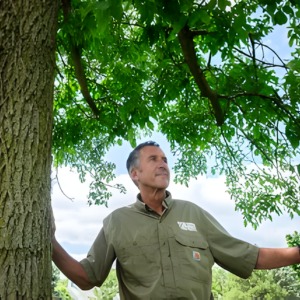
Greg Ranallo
From the classroom to the trees
Greg Ranallo has been working with trees since he was 19 years old — a passion that began long before it became a profession. After earning a master's degree in education and teaching high school social studies in his native Minnesota, Greg ultimately followed the calling he'd had since boyhood and built Teacher's Tree Service into one of the Champlain Valley's most trusted arboriculture companies. As he puts it, "I was always more a tree guy who was teaching than a teacher who did tree work."
Our Articles
Is Fall a Good Time to Plant a Tree in Vermont?
Wondering if fall is too late to plant a tree in Vermont? See the local frost timeline, best species picks, and the mistakes that kill new trees.
How Can You Tell If a Tree Is Dangerous?
Worried a tree could fall on your property? Learn the warning signs Vermont arborists check first—and when to book a hazard assessment in Chittenden County.
Is Beech Leaf Disease Killing Your Beech Tree?
Beech leaf disease in Vermont has spread to 43 towns in two years. Spot the early warning signs, understand your management options, and protect your trees.
