Why Won’t My Shrub Lose Its Leaves in Vermont?
When a shrub won't lose its leaves while the rest of your Vermont yard goes bare, it's usually invasive buckthorn or honeysuckle. Here's how to tell which.
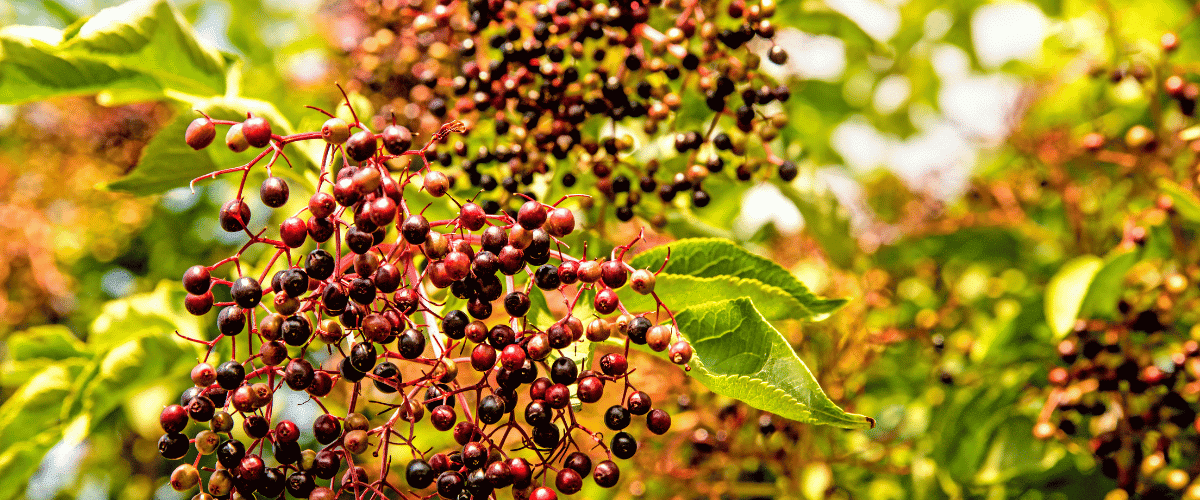
By late October, a majority of yards have shed most of their leaves. When a shrub won’t lose its leaves, Vermont homeowners are often looking at one of three species: common buckthorn, glossy buckthorn, or invasive shrub honeysuckle.
Each is a regulated invasive species in Vermont, and the shrub you’re looking at is usually not the only one on the property.
Key Takeaways
- A shrub that is still green in October while everything else has thinned out is often common buckthorn, glossy buckthorn, or invasive shrub honeysuckle.
- Leaf edges and a simple stem cross-section, the pith test, are enough to tell buckthorn and invasive honeysuckle apart.
- Buckthorn and invasive shrub honeysuckle are both on Vermont’s Agency of Agriculture list, meaning they are quarantined throughout the state.
- Fall is the ideal window to address these shrubs, but established infestations are a job for a professional, not a weekend project.
Why Is a Shrub Still Green in October When Everything Else Is Bare?
Common buckthorn, glossy buckthorn, ornamental shrubs like Southern Black Haw, and invasive shrub honeysuckle all leaf out earlier in spring and hold their leaves later into fall than Vermont’s native plants, which gives them extra weeks of growing season each year to produce energy, spread seed, and outcompete what’s around them.
That head start is why they’re so easy to spot right now, too: while your maples, dogwoods, and native shrubs have dropped most of their leaves for the season, these three are usually still fully leafed out and green.
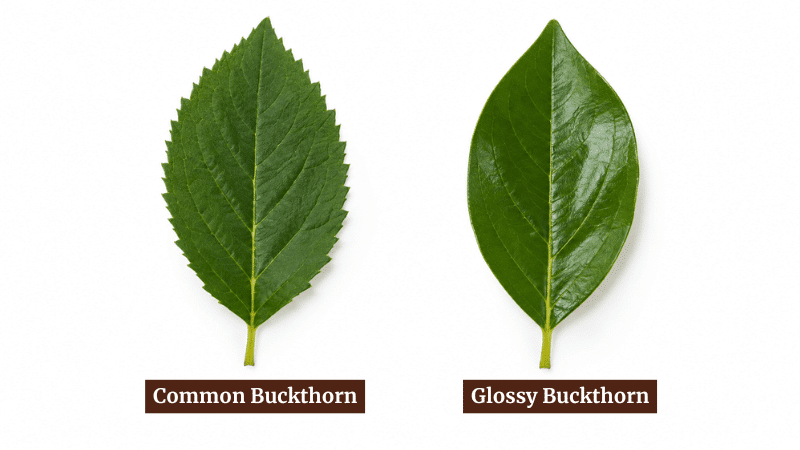
Leaf edges are the fastest way to tell common buckthorn from glossy buckthorn: toothed edges for common, smooth and shiny for glossy.
How Do You Tell If It’s Buckthorn or Invasive Honeysuckle?
Leaf edges and a quick cut into the stem are good ways to tell the two apart. From a distance, buckthorn and invasive honeysuckle can look similar, but each has a simple, reliable identification method that takes less than a minute and requires removing only a small leaf or stem sample.
Buckthorn
The leaf edge tells you which buckthorn species you’re looking at. The two are worth telling apart, since they grow to different mature sizes:
- Common Buckthorn ( Rhamnus cathartica ) : Finely toothed leaf edges, with mature shrubs reaching roughly 25 feet
- Glossy Buckthorn ( Frangula alnus ) : Smooth, shiny leaf edges with no serration, typically reaching 18 to 20 feet, though some plants grow considerably taller
Both species tend to branch into dense, multi-stemmed thickets instead of growing as a single tidy shrub.
Invasive Honeysuckle
Cut a roughly one-inch cross-section out of a stem, and the color and texture inside answer the question:
- Hollow, Brown Pith : The plant is invasive shrub honeysuckle.
- Solid, White Pith : The plant is native honeysuckle, and it should be left alone.
Still not sure? Invasive honeysuckle has smooth-edged, oval leaves arranged opposite each other, but some native honeysuckles look similar, so the pith test is the more reliable check.
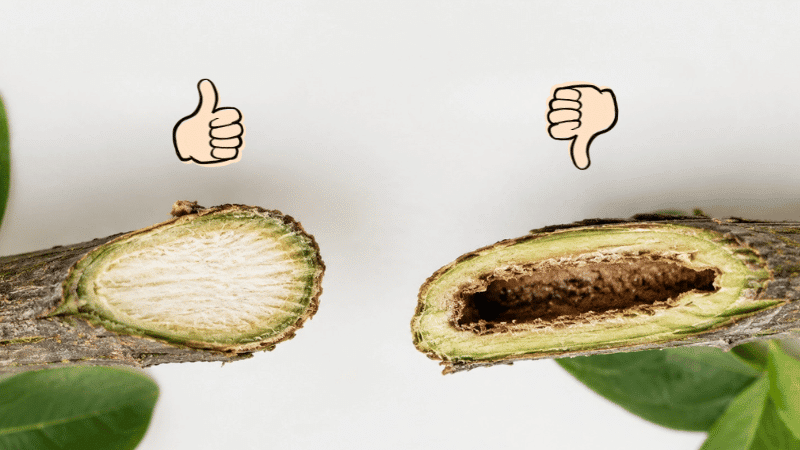
A hollow, brown pith means invasive honeysuckle, while a solid, white pith means a native plant worth keeping.
Why Does One Invasive Shrub Matter for Your Entire Property?
A single invasive shrub matters for the entire property because it’s rarely isolated, and because Vermont law restricts what you can do with it.
Vermont’s Noxious Weed Quarantine
Vermont’s Agency of Agriculture regulates both buckthorn and invasive shrub honeysuckle, which restricts selling, distributing, and transporting them anywhere in the state. The quarantine doesn’t require removing plants that are already established on your land, but it does confirm that these aren’t ordinary overgrown shrubs. They’re regulated invasive species with a documented history of displacing native plant communities.
Check Your Tree Lines and Wood Edges
Tree lines, wood edges, and the less-visited corners of your property are where buckthorn and honeysuckle spread most, which is why the shrub by your driveway is usually not the only one on site. Left unchecked, dense thickets also shade out native seedlings and understory plants, suppressing the next generation of the trees on your property rather than just crowding one corner of the yard.
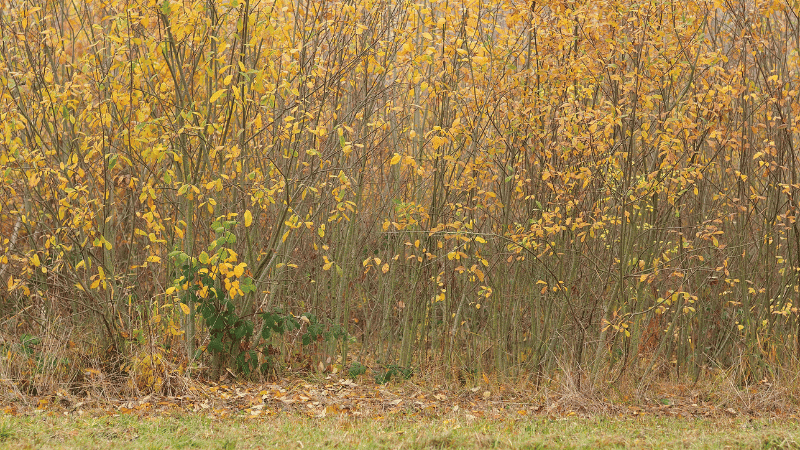
Tree lines and wooded edges are where buckthorn and honeysuckle spread fastest, often out of sight of the house.
What Does a Whole-Property Removal Plan Look Like?
A whole-property removal plan means treating invasives in the fall and following up for a few years, since buckthorn and honeysuckle regrow aggressively from cut stumps and root fragments if they aren’t correctly treated:
- Long-Term Strategy : A year-over-year management approach removes invasives while giving native species room to reestablish across the property.
- Professional Assessment : Teachers Tree Service’s ISA Certified Arborists build these multi-year plans as part of their habitat enhancement work, timing treatment to plant phenology so it reduces the invasive population rather than just delaying it.
- Woodlot Management : On properties with significant wooded acreage, invasive control is often paired with ongoing woodlot management, so wooded areas are assessed and maintained on the same timeline as the yard.
Frequently Asked Questions About Invasive Shrubs
Can I replace a removed buckthorn or honeysuckle with something similar?
Not with the same species. Vermont’s quarantine covers new plantings too, so buying a replacement buckthorn or honeysuckle at a nursery isn’t an option, and it’s worth checking plant tags before adding anything else nearby.
Does removing invasive shrubs disturb nesting birds?
It can, if the timing is wrong. Professional removal plans coordinate work around nesting seasons and plant phenology to minimize disruption to wildlife using the area.
Will new invasive shrubs just grow back after removal?
Yes, if the stumps and roots aren’t treated, they can resprout. Even after a thorough removal, seeds already in the soil can produce new seedlings for years, which is why follow-up visits matter.
Is there a second time of year I can spot these shrubs?
Yes, early spring, roughly April into May. The same early-leafing habit that keeps buckthorn and invasive honeysuckle green in October also puts leaves on them before most native trees and shrubs each spring, so a shrub that’s noticeably greener than its neighbors that early is often the same culprit you’d catch in October.
Can invasive shrubs on my property spread to my neighbors?
Yes. Buckthorn and honeysuckle spread by seed, often carried by birds that eat the berries, so an untreated infestation on one property can seed adjacent yards and woodlots over time.
Teachers Tree Service Can Assess Your Entire Property This Fall
The shrub standing out against your thinning yard in October warrants a closer look at the rest of your property before assuming it’s a one-time fix. A property-specific assessment is the next step to take, and one that looks at the entire landscape instead of just the shrub that got your attention. Request a proposal from Teachers Tree Service’s ISA Certified Arborists for a coordinated, multi-year plan tailored to your property.
Greg Ranallo
From the classroom to the trees
Greg Ranallo has been working with trees since he was 19 years old — a passion that began long before it became a profession. After earning a master's degree in education and teaching high school social studies in his native Minnesota, Greg ultimately followed the calling he'd had since boyhood and built Teacher's Tree Service into one of the Champlain Valley's most trusted arboriculture companies. As he puts it, "I was always more a tree guy who was teaching than a teacher who did tree work."
Our Articles
Is Fall a Good Time to Plant a Tree in Vermont?
Wondering if fall is too late to plant a tree in Vermont? See the local frost timeline, best species picks, and the mistakes that kill new trees.
How Can You Tell If a Tree Is Dangerous?
Worried a tree could fall on your property? Learn the warning signs Vermont arborists check first—and when to book a hazard assessment in Chittenden County.
Why Is My Big Old Tree Dying from the Top Down?
Is your mature tree dying from the top down? The cause is almost always below ground—and often reversible when caught early. See what causes it and when to act.
