Is Fall a Good Time to Plant a Tree in Vermont?
Wondering if fall is too late to plant a tree in Vermont? See the local frost timeline, best species picks, and the mistakes that kill new trees.
You bought a tree this fall, but now Vermont’s first frost is creeping into the forecast. Is there still enough time to get it in the ground?
Fall can be a good time to plant a tree in Vermont, but timing matters. Newly planted trees need several weeks for their roots to begin establishing before the ground freezes, which makes the weeks leading into winter especially important.
Timing isn’t the only factor, though. Planting depth, root condition, watering, and how the tree is handled when it comes out of the nursery container can all affect whether it establishes successfully or struggles long after winter has passed.
Key Takeaways
- Fall planting works in Vermont because roots keep growing until soil temperature drops to the point the ground’s no longer workable, giving a tree a head start before spring.
- In Northwestern Vermont, the first fall freeze typically arrives during the first two weeks of October, so most of the corridor should aim to have trees in the ground well before then.
- Circling or kinked roots on new nursery stock are one of the most commonly missed problems in a home planting job, and they often determine whether a tree thrives or slowly declines over years.
- Girdling roots can remain unnoticed for years and gradually restrict the movement of water and nutrients, eventually contributing to canopy decline, poor growth, instability, or tree failure.
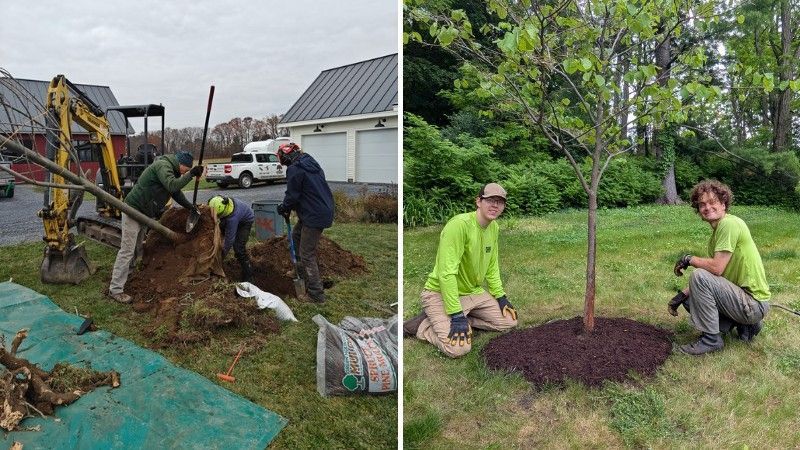
Fall planting often means moving dormant, balled-and-burlap stock; spring planting works with trees already leafed out for the season.
Is Fall or Spring Better for Planting in Vermont?
Generally, in Vermont, fall is the better choice, as long as the tree goes into the ground early enough to get several weeks of root growth before the first freeze. Tree roots can continue growing after above-ground growth slows, as long as soil conditions remain suitable. Planting while the soil is still workable gives new roots time to establish before the ground freezes.
The biggest limitation of fall planting is the shorter establishment window. Newly planted trees need consistent watering until the ground freezes, and planting too late leaves roots with less time to establish before winter. Spring planting offers a longer growing season before the next winter and typically gives homeowners a wider selection of trees at local nurseries.
Your Local Planting Deadline
In Northwestern Vermont, the first fall freezeusually shows up during the first couple weeks of October, with areas right along Lake Champlain seeing it a tad later than inland spots. Aim to have your tree in the ground about six weeks before the typical first freeze so its roots have time to begin establishing before colder conditions set in.
If digging, hauling, or timing makes the deadline feel tight, professional tree planting takes out the guesswork of getting a tree in the ground while the conditions are still good.
What Should You Plant This Fall in Vermont?
The right tree starts with the planting site, not what looks best at the nursery. Soil conditions, available sunlight, moisture, and space for the tree’s mature size all help determine which species can thrive there for decades.
The reason you’re planting matters, too. If you’re replacing a tree lost to a pest or disease, choosing a species that isn’t susceptible to the same threat can help prevent the problem from repeating.
For example, if emerald ash borer killed an ash on your property, planting another susceptible ash puts the replacement at risk. With emerald ash borer already responsible for significant ash loss across Chittenden County, an arborist can help you choose a better replacement species and identify other trees that may benefit from professional insect and disease control.
Vermont-Native Trees to Plant
There are a few native options that cover a majority of residential sites in the area:
- Pagoda Dogwood : Tolerates light shade and produces small white flowers in June
- American Mountainash : Produces fall fruit that’s a food source for birds
- Serviceberry : A strong small tree/shrub option for smaller lots
- Freeman Maple : A common EAB-safe replacement for ash
How Do You Plant a Tree the Right Way?
A healthy start depends on more than getting the tree into the ground before the first freeze. Planting depth, root placement, mulch, and watering all affect how quickly a new tree establishes and whether it develops a healthy root system.
Getting the Depth and Roots Right
Start by finding the root flare, where the trunk widens at the base and transitions into the roots. The root flare should sit at or slightly above ground level, whether you’re planting in heavy clay in the valley bottoms or thinner, rocky soil in the foothills.
Before backfilling, check the root ball for kinked, circling, or compacted roots that could interfere with healthy root development. Planting too deeply or leaving problematic roots uncorrected may not cause obvious symptoms right away, but the tree can begin declining years later as those problems restrict root growth. If an established tree is already showing signs of below-ground stress, a root zone diagnosis can help identify the cause.
Post-Planting Mulch and Water
Once the tree is planted, proper mulching and consistent watering help protect its developing root system as winter approaches:
- Mulch: Spread mulch over the root zone, but keep it away from the trunk. Mulch piled against the trunk holds excess moisture against the bark and can contribute to decay and other problems.
- Water: Keep the root zone consistently watered through the remainder of fall while the soil is still workable, since roots can remain active until the ground freezes.
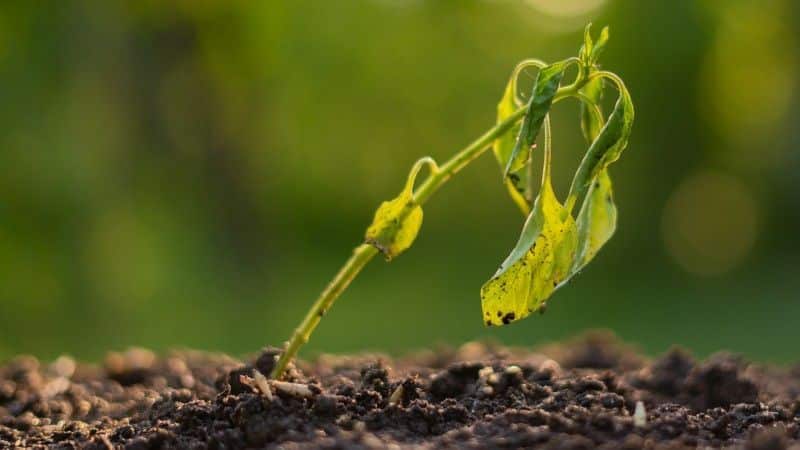
Root and watering problems, not the season a tree is planted in, cause most new tree deaths.
Why Do New Trees Fail After Planting?
A newly planted tree can look healthy for the first season or two even when problems are developing below ground. As the tree grows and depends more heavily on roots extending into the surrounding soil, planting mistakes and poor site conditions can begin showing up as:
- Planting Too Deep: A buried root flare can restrict healthy root development and contribute to long-term decline.
- Circling or Girdling Roots: Roots that aren’t corrected at planting can continue growing around the trunk or other roots, eventually restricting the movement of water and nutrients.
- Compacted Soil: Dense soil can limit the oxygen, water, and space new roots need to spread beyond the original root ball.
- Poor Drainage: Saturated soil deprives roots of oxygen and can lead to root decay and declining tree health.
- Improper Watering: Too little water can prevent new roots from establishing, while consistently saturated soil can be just as damaging.
- Wrong Tree for the Site: A species poorly suited to the available sunlight, moisture, soil, or growing space may struggle even when it was planted correctly.
Root establishment can take roughly a year and a half to five years or longer, depending in part on the tree’s size at planting. Warning signs during that period can include slow growth, smaller or discolored leaves, canopy thinning, branch dieback, a buried root flare, or continued decline despite proper watering.
More water or mulch won’t correct a structural root or planting-depth problem. If a recently planted tree continues to struggle, an arborist can evaluate the root collar, planting depth, soil conditions, and root system to determine what’s preventing it from establishing.
Frequently Asked Questions About Fall Tree Planting in Vermont
Can I still plant a tree after the first frost?
A light frost usually isn’t disqualifying. Once the ground freezes solid, though, planting has to wait until spring.
Does Teachers Tree Service handle fall tree planting?
Yes. Our ISA Certified Arborists handle species selection, root correction, and proper placement so a new tree gets the best possible start throughout Chittenden County and the surrounding area.
What size tree should you plant in the fall?
Smaller, younger nursery stock generally establishes faster in fall than large, mature transplants, since it has a smaller root system to reestablish before the ground freezes.
Can a tree be planted too early in the fall?
Not usually. Trees can go into the ground as soon as summer heat breaks and the site is workable. The real deadline to watch is the approaching frost window.
How far should a new tree be planted from the house or foundation?
Use the tree’s mature size and growth habit (not its nursery size) to determine spacing. Consider mature canopy width, root spread, overhead utilities, foundations, driveways, septic systems and other site constraints before planting.
Should evergreens be planted in fall in Vermont?
Many hardy conifers can be planted in fall, but they still need thorough watering before the ground freezes and may need protection from winter drying, particularly on exposed sites.
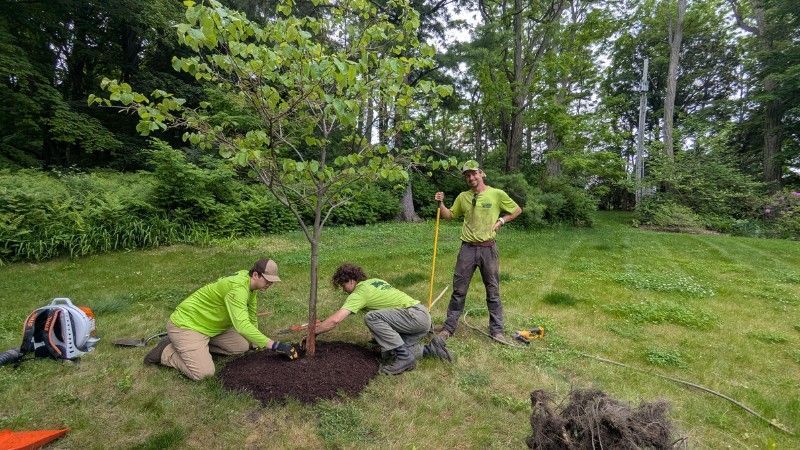
Correct depth, right location, and a properly shaped mulch ring give a newly planted tree its best chance of survival.
Get the Right Tree in the Ground at the Right Time with Teachers Tree Service
Fall can be an excellent time to plant a tree in Vermont, but getting it in the ground early enough is only part of the equation. The right species, planting depth, root preparation, and follow-up care give a new tree a much better chance of establishing successfully and thriving for years to come.
If you’re planning to add or replace a tree this fall, request a free proposal from Teachers Tree Service for professional tree planting. You can also ask our arborists about a pre-winter assessment to identify concerns with your existing trees before winter arrives.
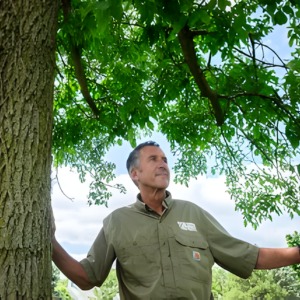
Greg Ranallo
From the classroom to the trees
Greg Ranallo has been working with trees since he was 19 years old — a passion that began long before it became a profession. After earning a master's degree in education and teaching high school social studies in his native Minnesota, Greg ultimately followed the calling he'd had since boyhood and built Teacher's Tree Service into one of the Champlain Valley's most trusted arboriculture companies. As he puts it, "I was always more a tree guy who was teaching than a teacher who did tree work."
Our Articles
How Can You Tell If a Tree Is Dangerous?
Worried a tree could fall on your property? Learn the warning signs Vermont arborists check first—and when to book a hazard assessment in Chittenden County.
Why Is My Big Old Tree Dying from the Top Down?
Is your mature tree dying from the top down? The cause is almost always below ground—and often reversible when caught early. See what causes it and when to act.
Is Beech Leaf Disease Killing Your Beech Tree?
Beech leaf disease in Vermont has spread to 43 towns in two years. Spot the early warning signs, understand your management options, and protect your trees.
