Is Beech Leaf Disease Killing Your Beech Tree?
Beech leaf disease in Vermont has spread to 43 towns in two years. Spot the early warning signs, understand your management options, and protect your trees.
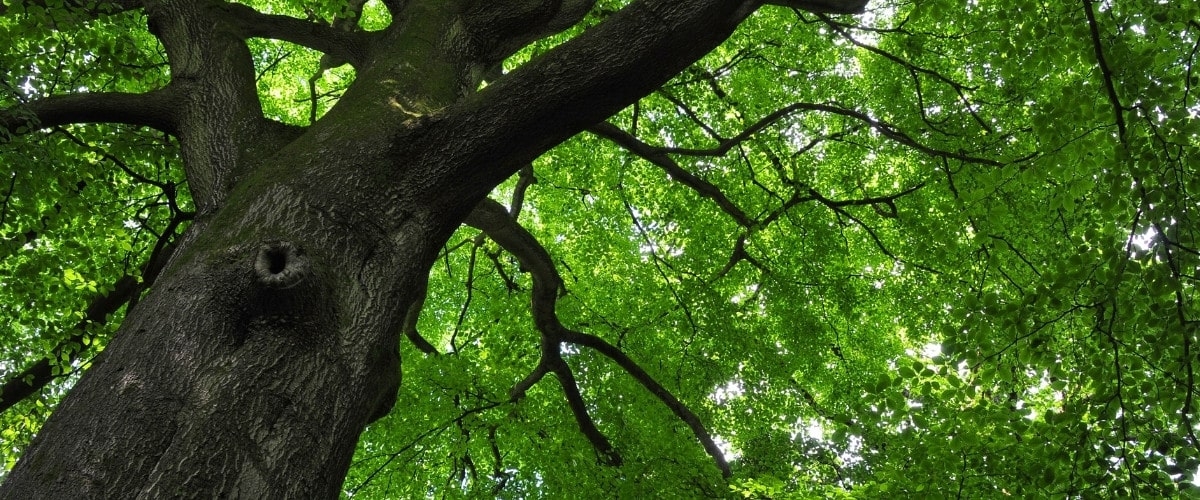
Beech leaf disease (BLD) is spreading rapidly across Vermont. In just two years, it has expanded from a single Vermont town to 43 communities, and scientists expect it to continue advancing throughout Northwestern Vermont.
While there is no cure, early identification is still important. Detecting BLD before symptoms become severe allows homeowners and arborists to manage the disease, slow its progression, and help preserve infected trees for as long as possible.
Key Takeaways
- The defining symptom of beech leaf disease is dark striping between leaf veins, best observed by looking up into the tree with sunlight behind the leaf.
- Disease progression varies dramatically by tree age: saplings typically decline in 1–2 years, while mature trees usually take 6–10 years.
- There is currently no cure for beech leaf disease, but early treatment with root flare injections or phosphite-based soil or basal bark applications can slow disease progression and help preserve tree health.
- Schedule a professional assessment immediately if you see signs of BLD — early intervention extends your management options significantly.
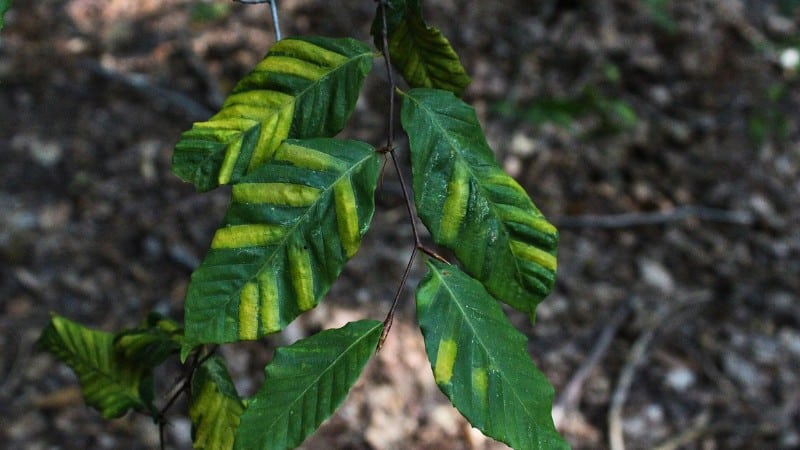
Photo courtesy of: usfs_Eastern_Region, Public domain, via Wikimedia Commons. Yellow banding between leaf veins is a clear visible symptom of beech leaf disease; keep in mind that early-stage BLD typically appears as dark green or black striping before progressing to this chlorotic stage.
What Is Beech Leaf Disease?
Beech leaf disease is a serious, emerging threat to American beech trees in Vermont. Caused by an invasive nematode (Litylenchus crenatae mccannii) that feeds within leaf tissue throughout the growing season, BLD disrupts the tree’s ability to photosynthesize effectively. Over time, this reduces the tree’s energy reserves, weakens its natural defenses, and ultimately leads to decline.
BLD was first identified in the United States in 2012 and joins a growing list of emerging tree diseases affecting Northeast hardwoods. Because American beech is Vermont’s most abundant forest tree, homeowners across Northwestern Vermont face real exposure to this disease.
How Do You Identify Beech Leaf Disease?
Look for dark green or black banding running parallel to the leaf veins — that’s the defining symptom. It appears at leaf-out in spring and stays visible through fall, so you don’t need special timing or equipment to spot it.
The banding is slightly raised, thicker than normal leaf tissue, and gives the leaf a ridged appearance. The easiest way to see it is to look up into the canopy with sunlight behind the leaves as backlighting reveals the stripes clearly.
As the disease advances, other symptoms become visible, including:
- Thickened, leathery leaf texture
- Curling and leaf distortion
- Aborted or crispy buds (empty buds that never open) on infested branches
- Reduced bud and leaf production season after season
- Yellowing (chlorosis) visible in fall
- Premature leaf drop and twig dieback
Beech Tree Problems That Look Like BLD
Several beech tree problems can be mistaken for BLD. Knowing the differences helps you accurately identify what’s affecting your tree:
| Problem | Why It’s Confused With BLD | What It Looks Like | Key Difference from BLD |
|---|---|---|---|
| Woolly beech aphid | Both cause visible leaf deformation | Rolled or curled leaves, often with white woolly tufts | No dark banding between veins |
| Erineum gall | Both produce abnormal patterns on leaves | White or red patches on the undersides of leaves | Damage appears on underside, not top; no striping |
| Anthracnose | Both discolor foliage during the growing season | Brown lesions with yellow halos | Spotted pattern, not the parallel striping of BLD |
| Beech bark disease | Similar name and both common Vermont beech problems | Cankers, sunken areas, and bleeding spots on bark | Affects bark, not leaves |
PRO TIP: Many homeowners miss BLD because they’re examining fallen leaves, looking at the tree from the side, or only checking branches they can reach. The banding is most visible from below with sunlight behind the leaves, and the disease often shows up in the lower or interior canopy first — so look up into the canopy and check several branches, including the interior ones, before ruling it out.
How Fast Does Beech Leaf Disease Progress?
The speed of beech leaf disease progression depends heavily on your tree’s age and size. Mature trees and saplings face very different timelines.
| Tree Type | Time to Mortality | Progression Pattern | Intervention Window |
|---|---|---|---|
| Mature trees (8″+ diameter) | 6–10 years | Lower branches first, progresses upward | Broader — time for assessment and management |
| Saplings and understory trees (under 8″ diameter) | 1–2 years (90%+ mortality untreated) | Rapid full-tree decline | Very narrow — act immediately |
If you have a mix of beech ages on your property, prioritize professional assessment of the saplings and smaller trees first; they have the least time to spare.

A professional assessment confirms whether what you’re seeing is BLD or a lookalike, and reporting suspected cases helps Vermont state agencies track the disease’s advance across the state.
What Should You Do If You Suspect Beech Leaf Disease?
If you’ve spotted dark striping on your beech tree leaves, the first step is to schedule a professional assessment. Early action extends your options and improves outcomes significantly.
Here’s exactly what to do:
Step 1: Schedule a Professional Assessment Immediately
Don’t wait until next season. An ISA Certified Arborist can confirm BLD (distinguishing it from lookalike problems), assess your tree’s overall health and dieback level, and recommend which management option or combination fits your tree’s situation and your goals. Early diagnosis determines your options.
Step 2: Report Suspected New Cases
Reporting suspected cases helps scientists track the disease’s advance across Vermont. If you suspect BLD in an area not yet listed as confirmed, report it to:
- Vermont Forest Invasive Pest Status Map: Check whether BLD has already been confirmed in your town.
- Vermont Invasives “Report a Tree Disease” tool: Submit photos and details if your town isn’t on the map yet.
Reporting helps at the state level, but what you do with infected material on your own property matters just as much for slowing local spread.
Step 3: Avoid Moving Infected Material
The nematode’s exact spread mechanism is still being studied, but human movement of infected wood, mulch, and soil is known to accelerate its expansion. This means it is crucial to not transport beech material from infected areas, as doing so risks spreading the disease to new locations and neighboring properties.
Step 4: Act Within the Management Window
BLD management is seasonal: the available options work best between late spring and early August, while trees are actively growing and symptoms are easiest to evaluate. Schedule your assessment early in the season so there’s time to act within that window if your tree is a candidate.
How Is Beech Leaf Disease Treated?
BLD is a disease you manage, not one you cure. For mature beech trees with structural or sentimental value, management can mean many additional years of healthy life. How many years depends on when you catch it; the window for meaningful intervention closes once dieback passes about 50% of the canopy.
For trees already in advanced decline — or saplings caught too late — the math often points toward removal. Continued management is expensive over multiple seasons for a tree unlikely to recover, and advanced dieback can pose real safety concerns for trees near homes, driveways, or power lines, where hazardous tree removal is often the safer path forward.
Beech Leaf Disease Management Options
Our plant health care program offers three management options that can reduce nematode populations, slow disease progression, and support the tree’s defenses:
| Treatment | How It’s Applied | How It Works | Best For | Timing | Frequency |
|---|---|---|---|---|---|
| Macro-Injection (Arbotect 20-S) | Trunk injection of a nematicide | Reduces nematode populations in leaf buds; suppresses symptoms over a two-year period | Mature trees 8″+ in diameter with structural value | Late spring – early August (after full leaf expansion) | Every 2 years |
| Bark Spray (Potassium Phosphite / Dog-Phite 0-0-29) | Sprayed on the bark surface | Activates the tree’s natural defense mechanisms rather than killing the nematode directly | Understory trees and smaller specimens in high-disease-pressure areas | May – August | 2 applications annually, 1 month apart |
| Soil Injection (Root Zone Support) | Three-component blend injected 12–18 inches below soil surface | Supports tree health and vigor from the root system upward; strengthens resistance to disease progression | Trees in high-disease-pressure zones (surrounded by untreated infected trees) | May – August | 2 applications annually, 1 month apart |
Choosing the Right Treatment for Your Tree
Technically, all three treatments can be used together for maximum effect on a single tree. But your arborist will assess your specific tree’s diameter, dieback level, structural value, and location to recommend which option or combination makes the most sense for your particular situation and goals.
Frequently Asked Questions About Beech Leaf Disease in Vermont
Can I prevent beech leaf disease on healthy trees?
Prevention isn’t possible once the nematode is present in your area. However, keeping a beech vigorous through proper watering, avoiding soil compaction, and managing other stressors may slow progression if infection occurs. In high-disease-pressure areas, proactive soil injection with potassium phosphite can support tree health before symptoms appear.
How much does beech leaf disease treatment cost?
Costs vary by tree diameter, treatment choice, and whether methods are combined. Macro-injection pricing scales with tree size; bark spray and soil injection are typically more affordable per application. Your arborist will provide a detailed proposal after assessment.
What should I do with beech wood from a dead or removed tree?
Don’t transport beech wood, chips, or mulch beyond your property if the tree had BLD. Chip or burn on-site or arrange disposal through a professional tree service to prevent spreading the disease to uninfected areas.
Does beech leaf disease spread to other tree species?
No. BLD only affects beech trees (genus Fagus), including American beech and ornamental European beech varieties. Other tree species on your property aren’t at risk from the BLD nematode itself.
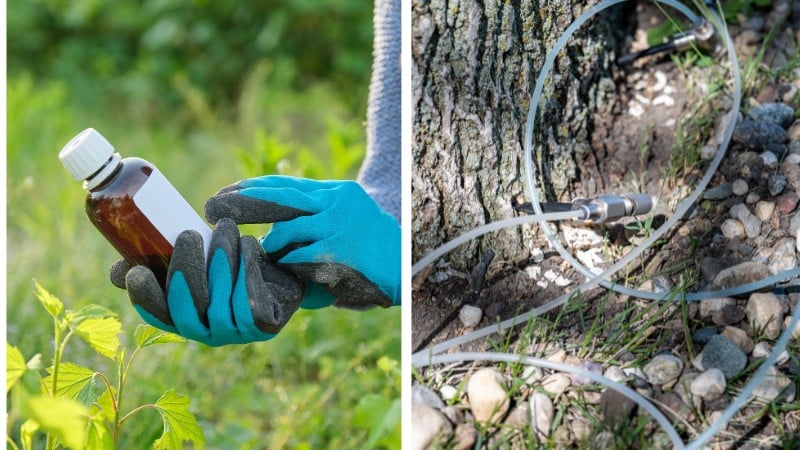
Macro-injection requires specialized equipment and certified applicators to deliver nematicide directly into the tree’s vascular system through ports installed in the trunk.
Protect Your Beech Trees by Scheduling a Professional Assessment Today
Beech leaf disease is in Vermont, and it’s spreading. While there’s no cure, identifying the disease early gives you the best opportunity to slow its progression and make informed decisions about treatment and long-term care.
Teachers Tree Service is locally owned and TCIA-accredited, with eight ISA Certified Arborists on staff and decades of experience managing Vermont’s tree health threats. If you have beech trees on your property, give us a call at 802-922-3428 or request a proposal online for a professional assessment.
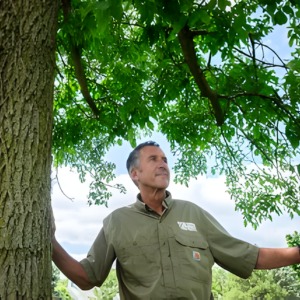
Greg Ranallo
From the classroom to the trees
Greg Ranallo has been working with trees since he was 19 years old — a passion that began long before it became a profession. After earning a master's degree in education and teaching high school social studies in his native Minnesota, Greg ultimately followed the calling he'd had since boyhood and built Teacher's Tree Service into one of the Champlain Valley's most trusted arboriculture companies. As he puts it, "I was always more a tree guy who was teaching than a teacher who did tree work."
Our Articles
How Can You Tell If a Tree Is Dangerous?
Worried a tree could fall on your property? Learn the warning signs Vermont arborists check first—and when to book a hazard assessment in Chittenden County.
Why Is My Big Old Tree Dying from the Top Down?
Is your mature tree dying from the top down? The cause is almost always below ground—and often reversible when caught early. See what causes it and when to act.
It Takes a Village to Rebuild an Osprey Nesting Site
Teachers Tree Service was proud to support a community effort to rebuild an osprey nesting site in Vermont. Read the full article originally published by The Charlotte News.
